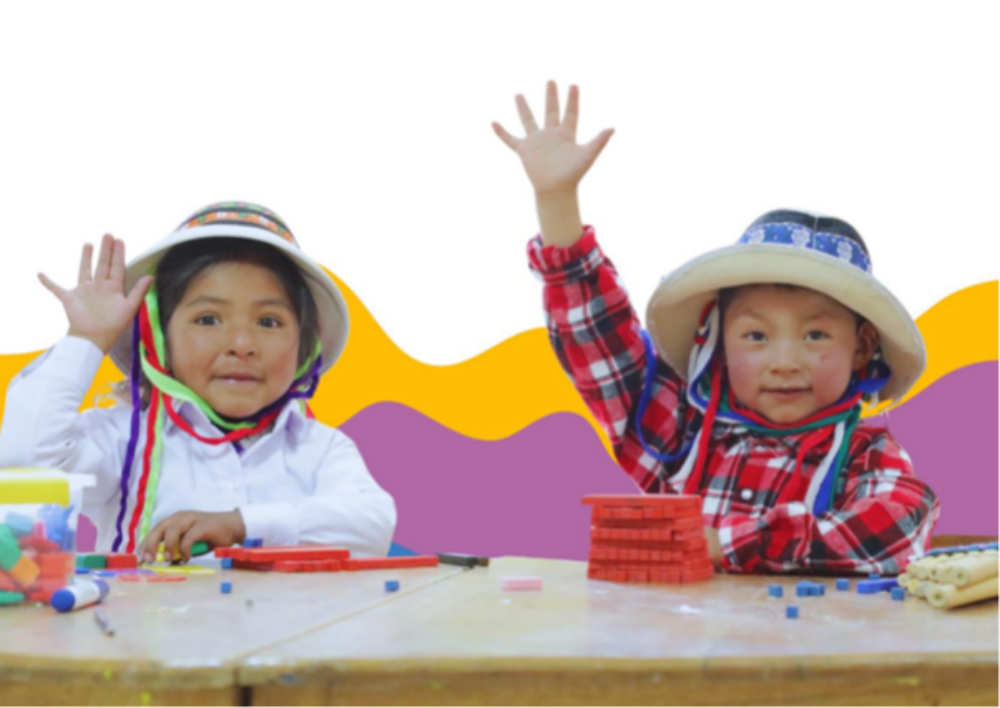
Las Bambas School Reinforcement Program (PREB in Spanish) supports primary school students across 11 Quechua-speaking communities in Challhuahuacho, strengthening learning in communication and mathematics. Delivered through the “Asociación Las Bambas” and CARE Peru, the program has driven significant improvements in outcomes: reading proficiency rose from 13% to 33% and mathematics from 14% to 35%.
Reading proficiency increased from 13% to 33% and mathematics from 14% to 35%.
In 2025, it was recognised nationally as a success story in closing educational gaps.
Challhuahuacho is a rural region shaped by limited infrastructure and high poverty, factors that directly affect children’s access to quality education. Before the program, only 13% of students reached expected levels in reading and mathematics. Schools lacked resources and trained teachers, and family involvement was low, widening the gap between rural and urban students.
The PREB aligns with national education strategies and MMG’s Corazón Social Management Model, which places human development at the centre of our social investment. The goal is to close learning gaps, strengthen equityand open up future educational pathways for students in the region.
The program was built around a reinforcement model tailored to rural, multigrade and Quechua-speaking classrooms. Full-time specialist teachers and psychologists were hired and trained in methods suited to these environments. Sessions in reading, writing, mathematics and socio-emotional skills were delivered through structured, personalised learning plans, with small groups of up to 15 students prioritising those with the greatest needs.
Teachers received ongoing coaching to stay aligned with the national curriculum. Computers, printers and projectors were provided to modernise teaching, alongside educational materials and hygiene kits for students and staff. Psychologists supported students, teachers and families, and Parents’ Schools were established to strengthen family engagement in children’s learning.
The results have been consistent and meaningful. Reading proficiency climbed from 13% to 33% and mathematics from 14% to 35%, with sustained year-on-year improvement observed across the district. Socio-emotional support contributed to a better school climate, reduced violence and lower dropout rates. Family participation improved noticeably through the Parents’ School initiative.
Formal agreements with UGEL Cotabambas helped integrate the model into local education plans, strengthening the connection between the program and the public system it supports.
In 2025, the PREB was recognised nationally as a “Success Story: Towards Closing Gaps.” It now serves as a reference model for public-private partnerships in rural education, showing what community-aligned investment can do for the next generation.