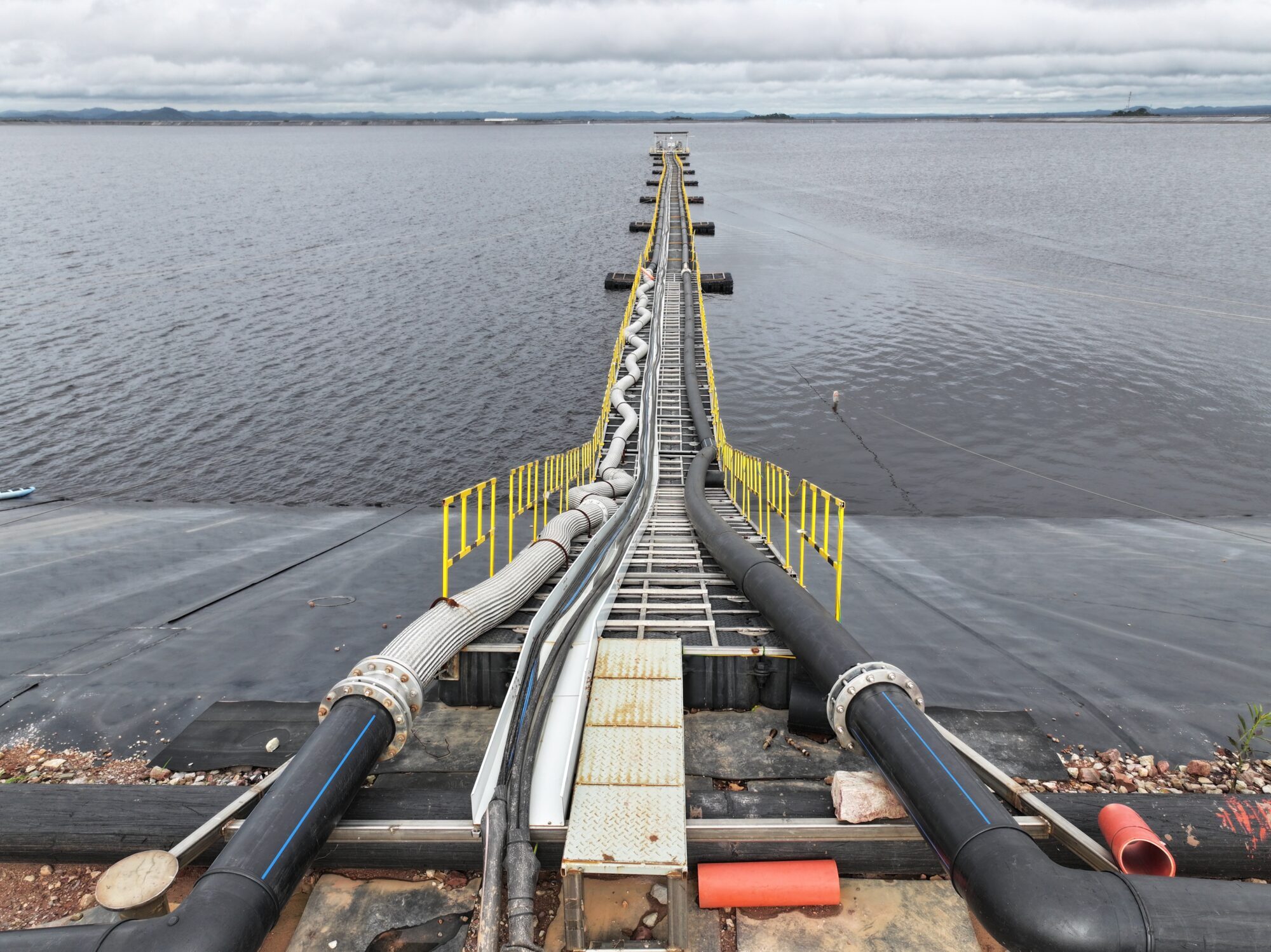
At our Kinsevere mine, we recognise the critical importance of water in a region where it holds significant social, environmental and economic value. In 2025, we strengthened our water stewardship by improving recycling, reducing dependence on freshwater boreholes, and upgrading key parts of our return water system.
We increased recycled water use to 73% of total operational water consumption and improved recovery from our tailings facilities.
Water is essential for ore processing at Kinsevere, and the surrounding communities depend heavily on groundwater, particularly during periods of reduced rainfall. With observed declines in annual rainfall and increasing pressure on local water sources, careful stewardship has become more important over time.
Historically, water returning from our Tailings Storage Facilities (TSFs) was under-utilised due to equipment limitations, variable water balances and gaps in monitoring. As regulatory expectations, community needs and MMG’s own sustainability requirements grew, we recognised the need to improve efficiency, reduce freshwater withdrawals and strengthen data confidence.
Kinsevere launched a site-wide initiative to increase recycled water use, improve return water reliability and modernise our processes. We repaired and upgraded water reclaim pumps, improved decant structures and introduced a preventative maintenance regime to reduce downtime and leakage. Additional flow meters were installed for accurate, real-time monitoring, and a pump upgrade at TSF 2, scheduled for completion in late 2025, will increase capacity to 500 m³/h.
Recycled water use was increased across leaching, thickening and washing circuits, and recycled water targets were formally built into daily operational planning. We updated the site-wide water balance model and introduced monthly cross-functional water review meetings involving the Processing, Water and SSHEC teams. Pipeline networks were repaired, stormwater management was optimised, and return water structures were rehabilitated to increase recovery efficiency. Operations teams also received training on water conservation, recycled water performance indicators were added to shift reports, and progress was shared with site leadership through monthly dashboards.
Recycled water use increased by 25%, reaching 73% of all operational water consumption. Over the same period, freshwater abstraction from boreholes decreased by 15%. Between March and May 2025, reclaimed water volumes from TSF 3 rose by almost 43 ML, reaching a monthly recovery rate of 95 ML.
Operations are now more stable due to reliable recycled water availability, with reduced risk of production interruptions linked to water shortages. Improved monitoring has given us better visibility over water movements, and clearer documentation has strengthened our readiness for upcoming assurance reviews. Together, these results reflect a meaningful step forward in responsible water management. By reducing our reliance on boreholes, we are helping to ease pressure on the groundwater that neighbouring communities depend on, and we will continue working to strengthen this.